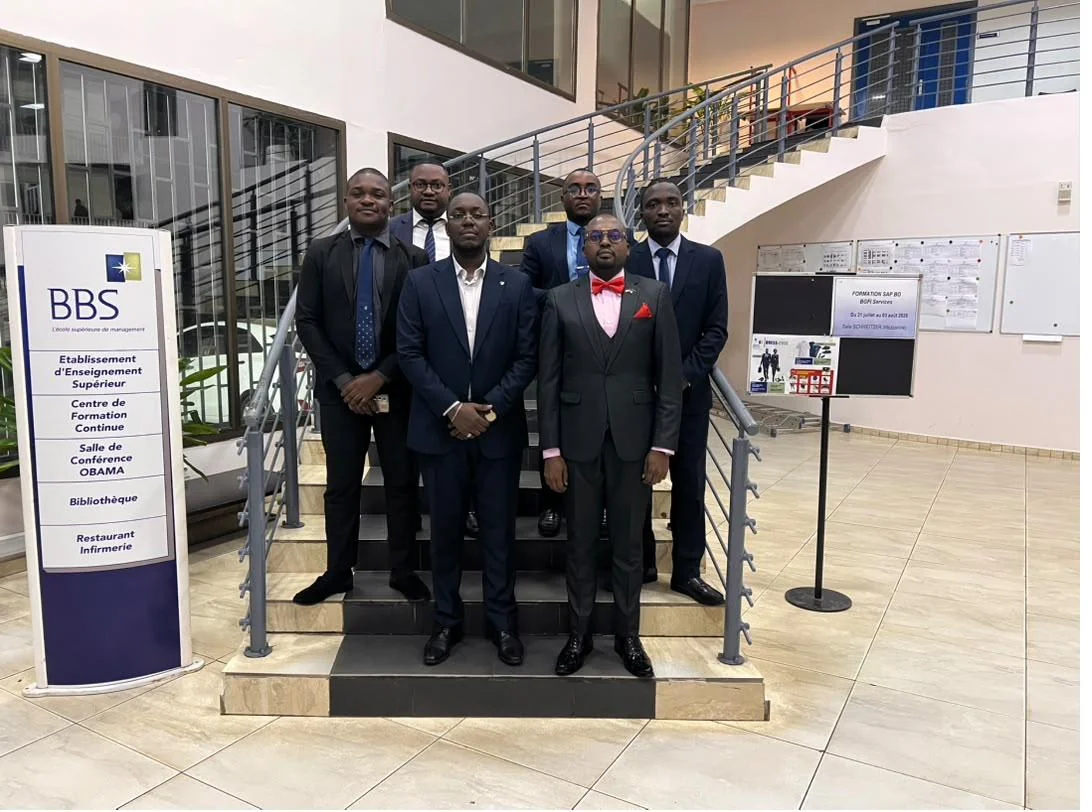
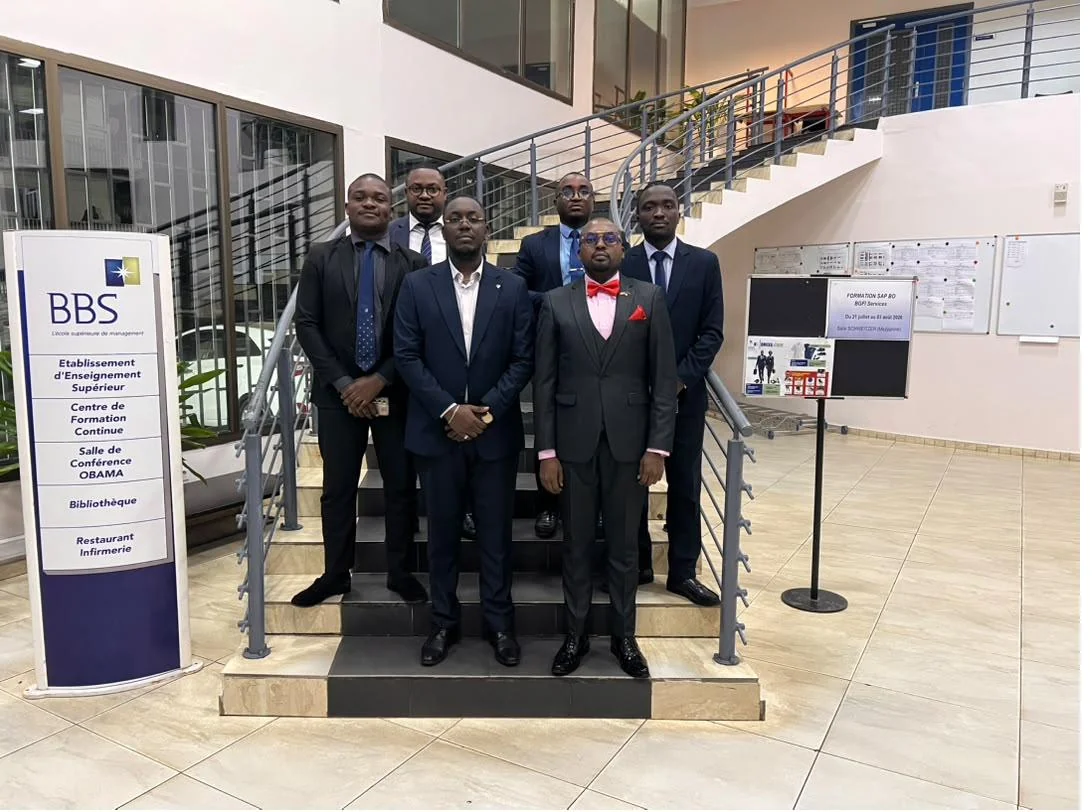
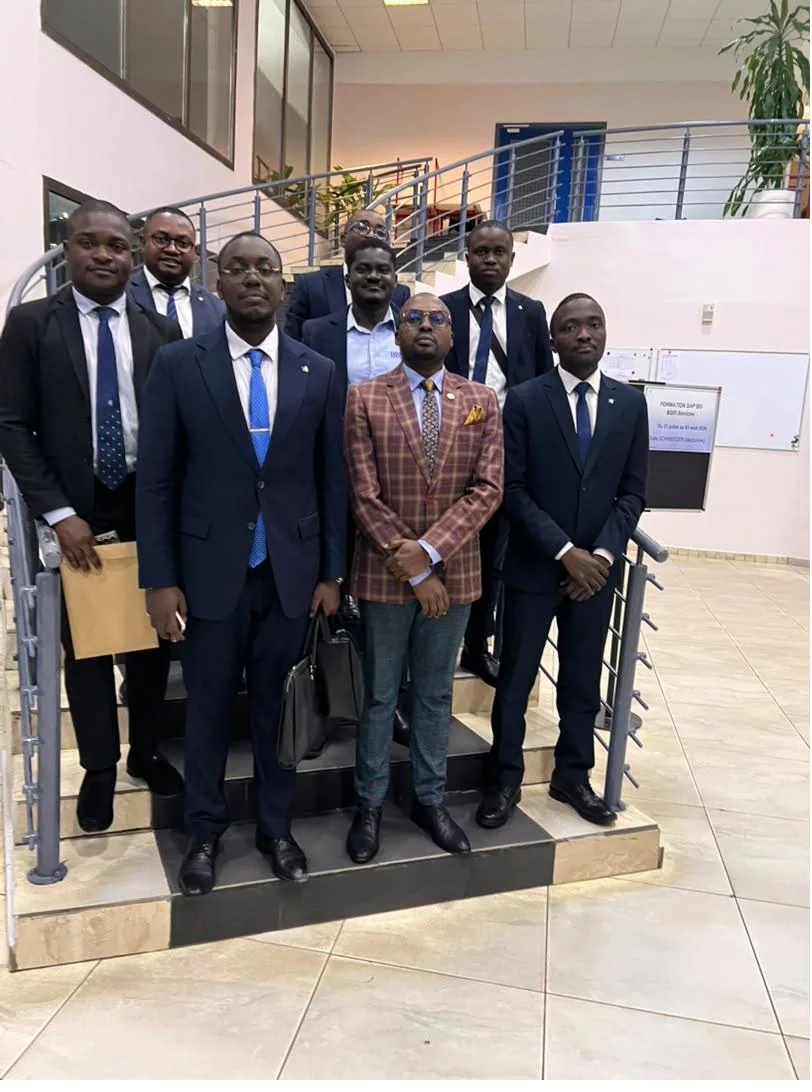
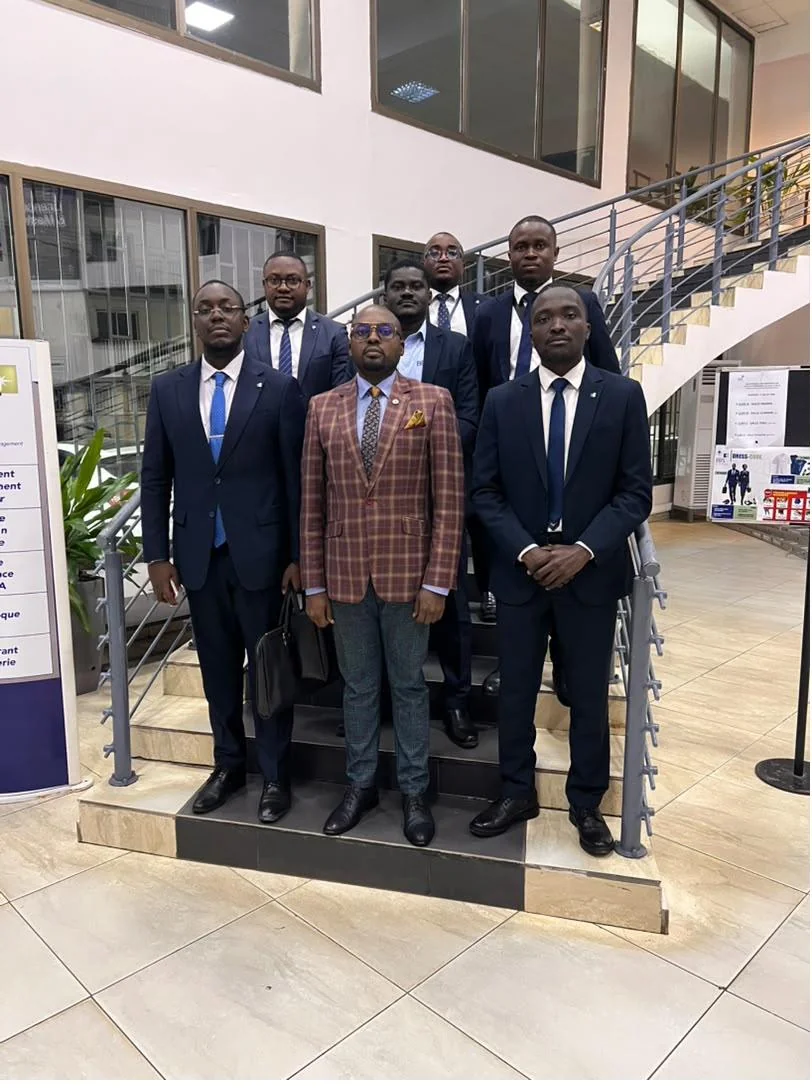
From 17 to 22 July 2026, in the classrooms of the BGFI Business School, serving bankers lived through a historic first: the first Master's-level course on cryptocurrencies, blockchain, stablecoins and central bank digital currencies ever taught in Central Africa. The immersive account of a week that speaks to an entire continent.
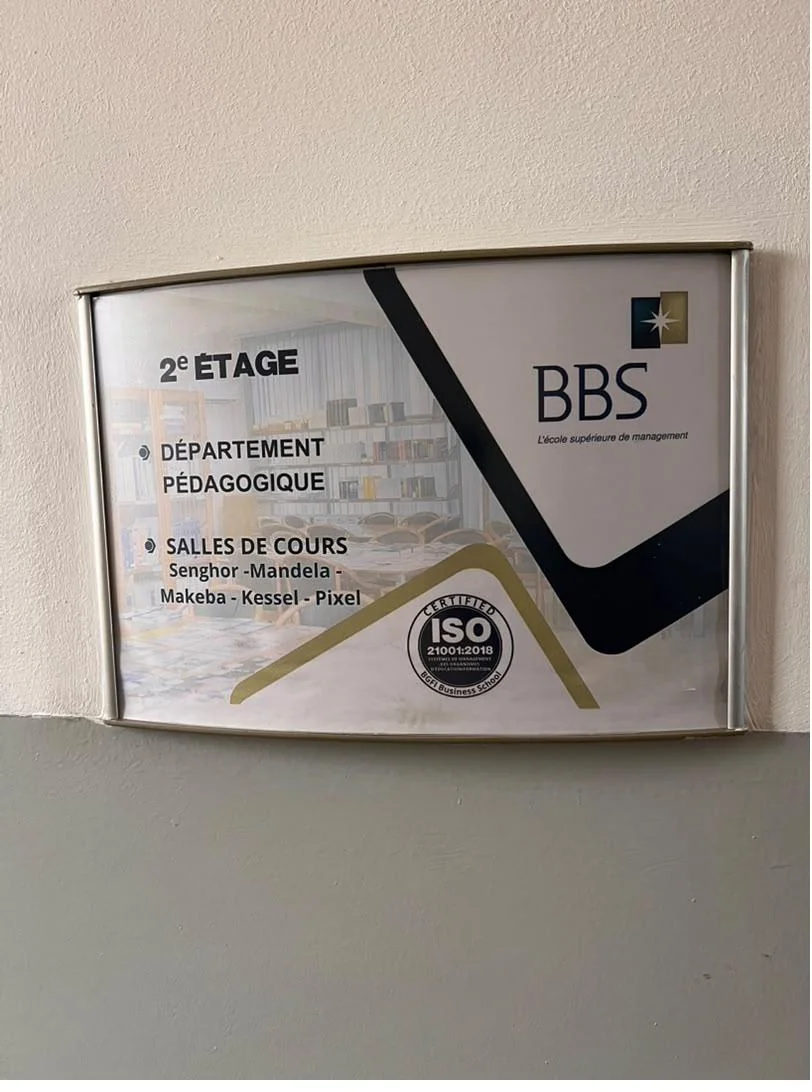
Some course openings feel like affairs of state. On this 17th of July 2026, on the second floor of the BGFI Business School in Libreville — the teaching department, with its Senghor, Mandela and Makeba classrooms — serving banking executives take their seats before a screen displaying a title no Central African university had ever placed on a Master 2 curriculum: "Cryptocurrencies & Blockchain — Focus on CBDCs & Stablecoins". The teaching unit, delivered in the academic LMD format for 2026-2027, is unprecedented in the recent academic history of Gabon and, more broadly, of Central Africa.
The calendar itself seems to have been written by history. Eight days earlier, on 9 July 2026, the Bank of Central African States formalized its accession to the Pan-African Payment and Settlement System (PAPSS) developed by Afreximbank — opening to the six CEMAC countries an infrastructure that now connects 28 African countries and more than 190 banks and fintechs. When the Libreville students sit down for their first module, the question of African cross-border payments is no longer a textbook abstraction: it is the front page of their own sub-region's monetary news.
Fifteen hours of lectures, tutorials, a workshop and a final project, spread over four days: the format is compact, the ambition immense. For this is not about initiating students into a technological fashion. It is about intellectually equipping those who, the following week, will return to their trading rooms, their compliance and payment departments, to confront a question no bank in the world can now evade: what should be done about digital currencies?

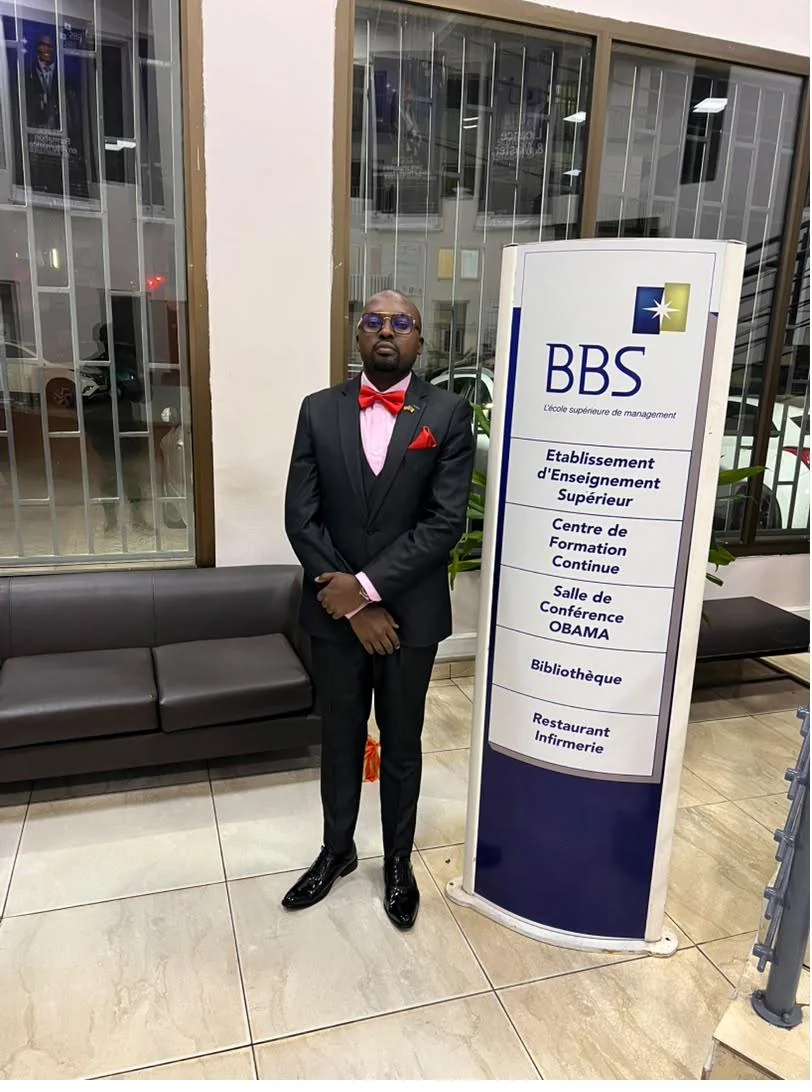
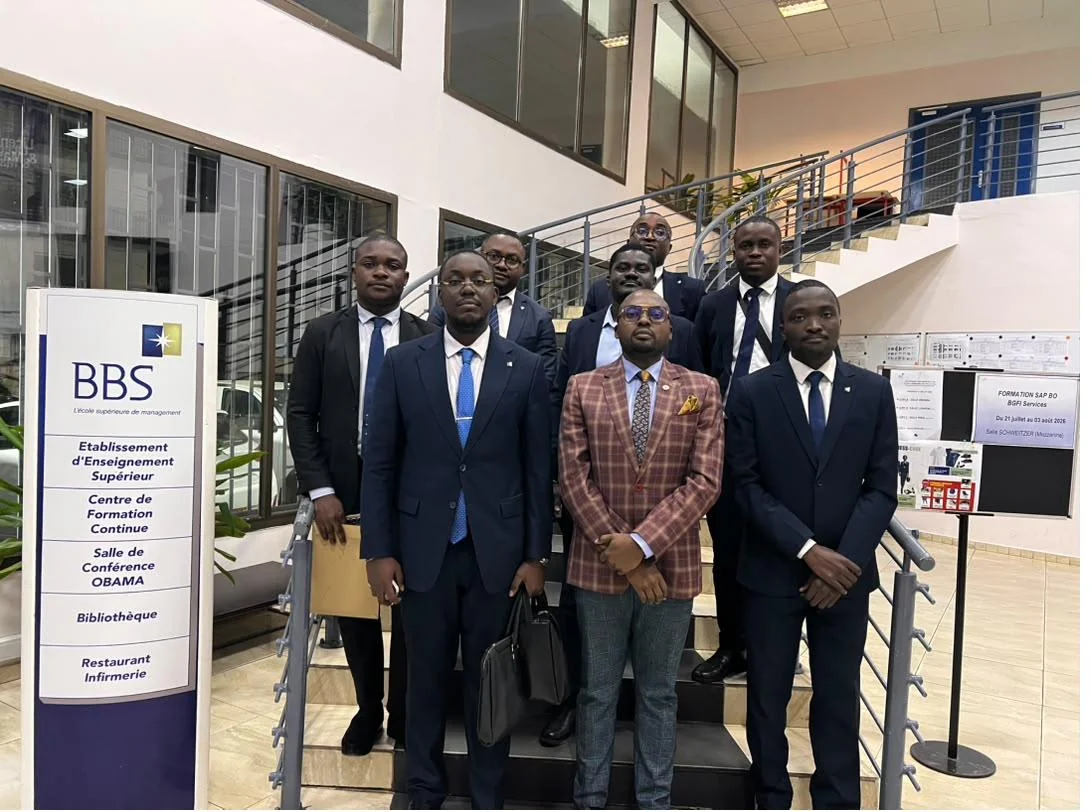
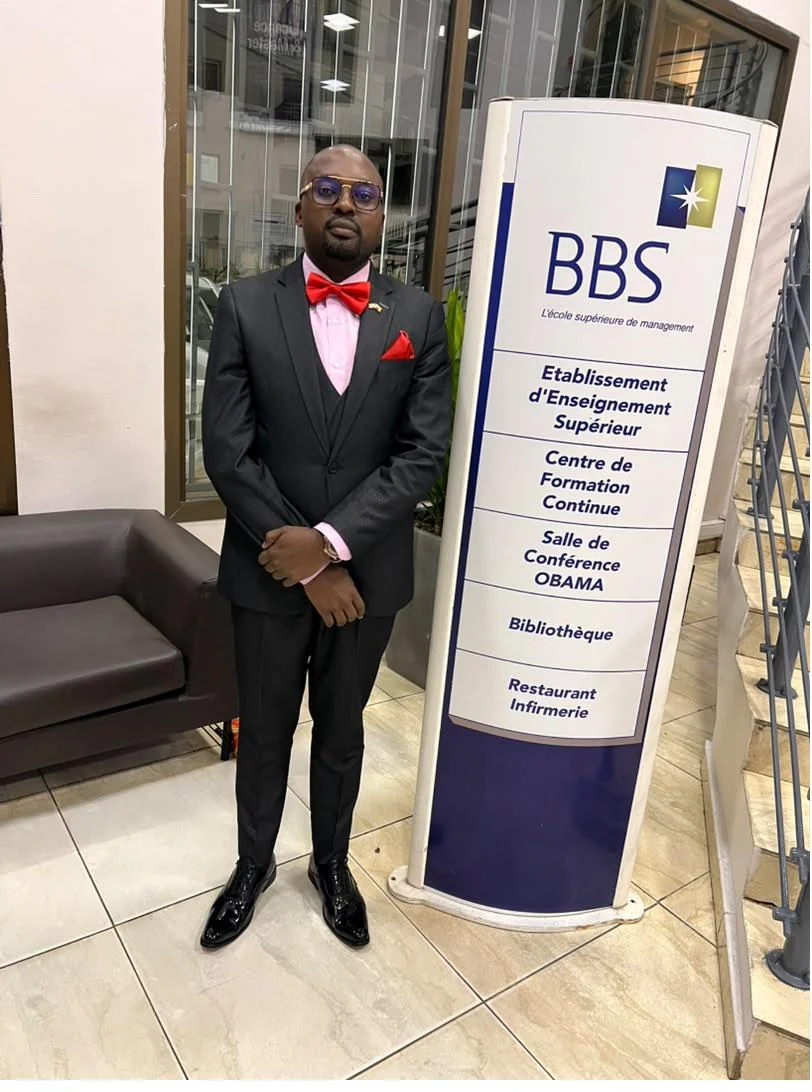
The choice of venue is no detail — it is a message. Founded in 2008 within the BGFIBank Group, Central Africa's leading banking group, the BGFI Business School rose in 2025 to become the very first grande école in Central Africa certified ISO 21001:2018, the international standard for educational organizations. The teaching department's sign displays it without ostentation, next to the names of the classrooms; the certification itself places BBS within a very select circle of African institutions able to speak on equal terms with the world's standards in banking and financial education.
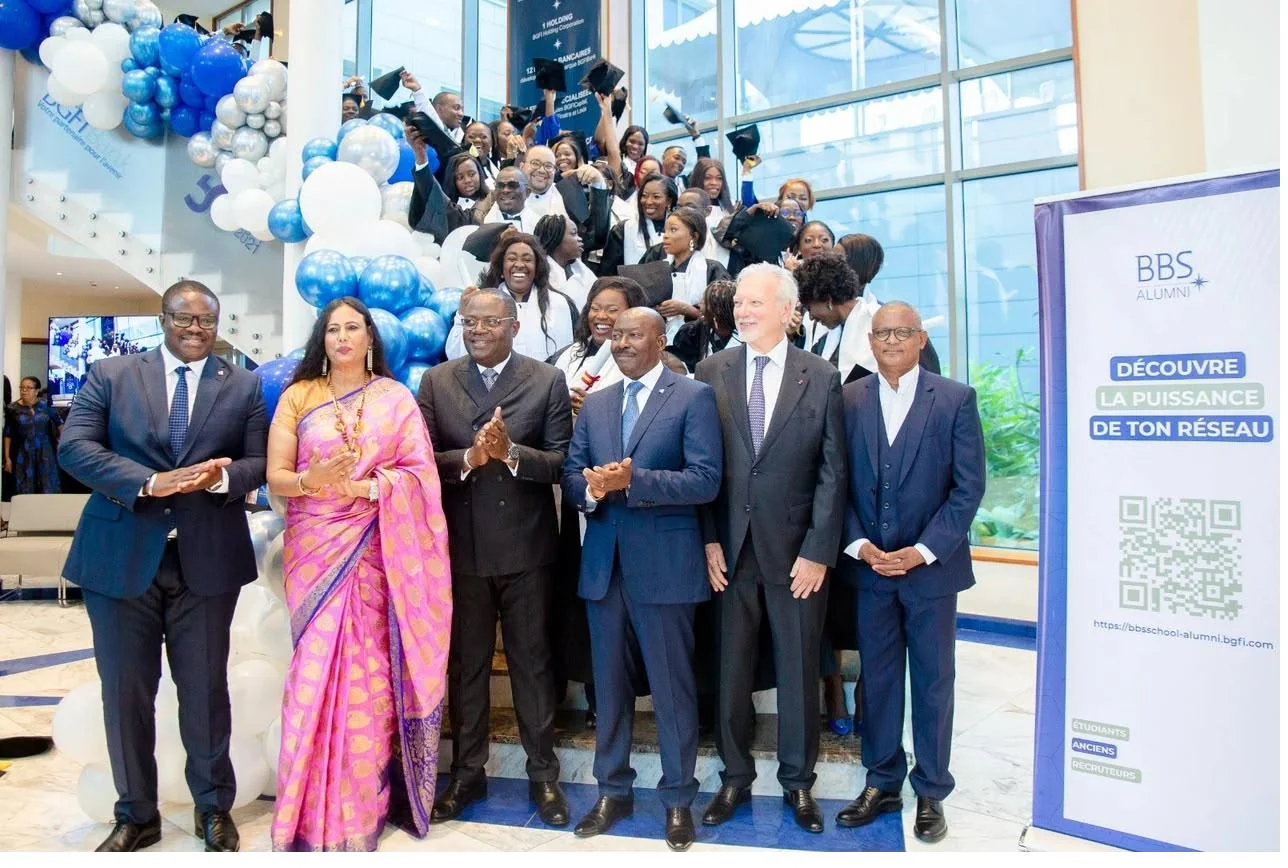
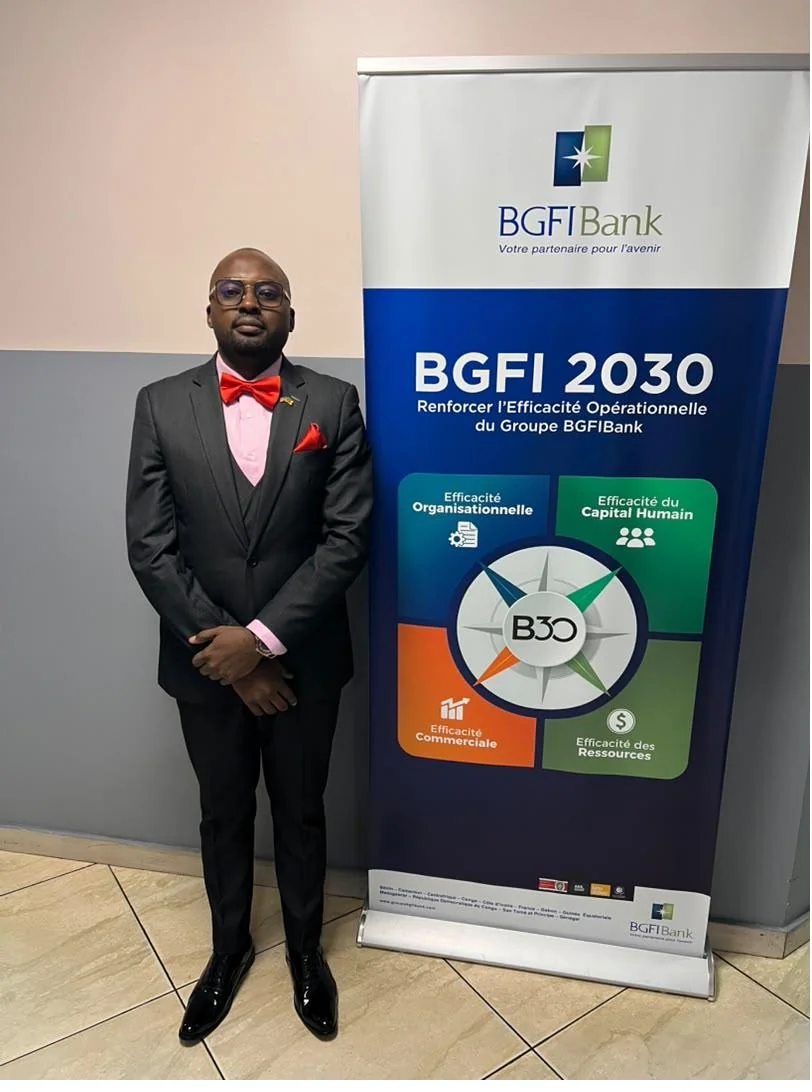
Backed by a group present in a dozen countries, whose some 3,000 employees it trains, and supported by a structured alumni network, BBS is not a school that comments on the banking sector: it is the school Central Africa's banking sector has given itself — a laboratory where the sub-region's banking industry thinks through its own transformation, under the strategic ambition "BGFI 2030" recalled by the banners in its corridors. That it should be precisely this institution, led by Professor Pamphile Mezui-Mbeng, that opens the way to the teaching of digital assets is no accident: it is the hallmark of houses that prefer to precede history rather than endure it.
By inviting to Libreville, from 16 to 29 July 2026, an outside expert of continental stature to lead this founding seminar, the school performs an exemplary act of academic governance: seeking out, wherever it may be found, the best available expertise, and placing it at the service of its students.


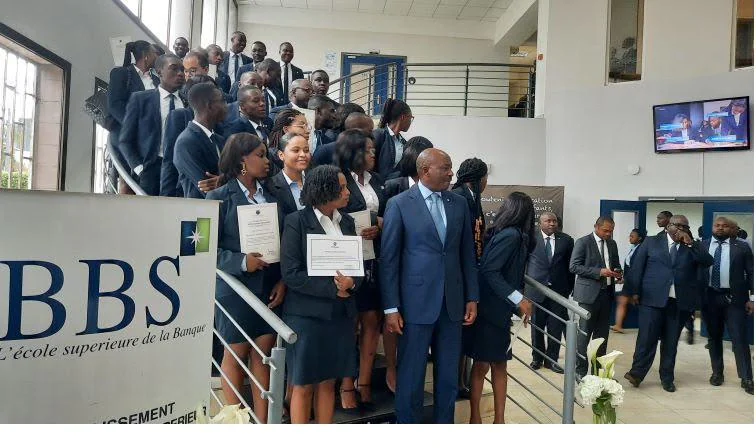
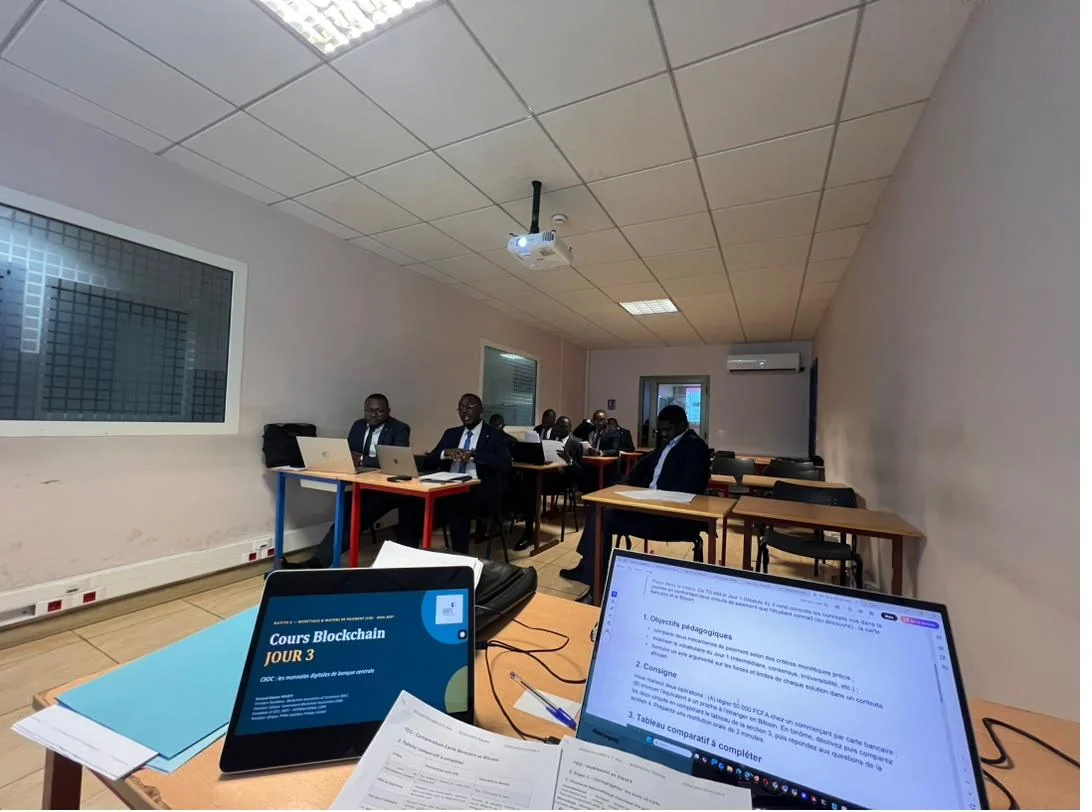
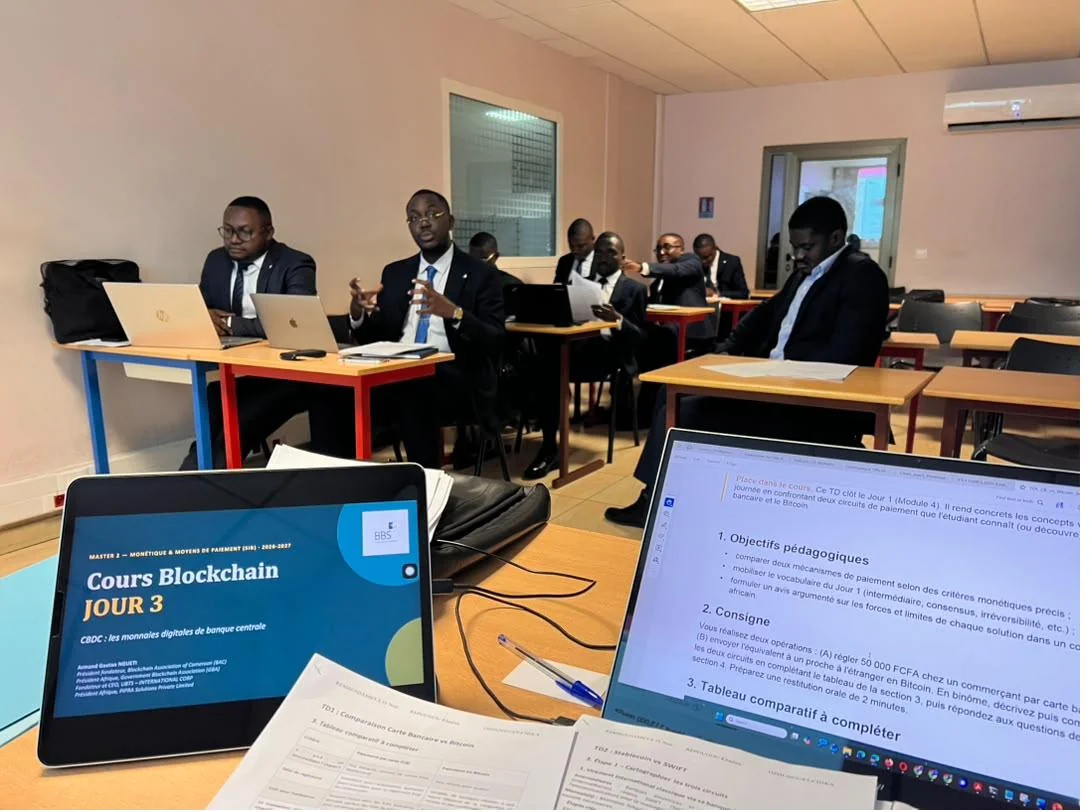
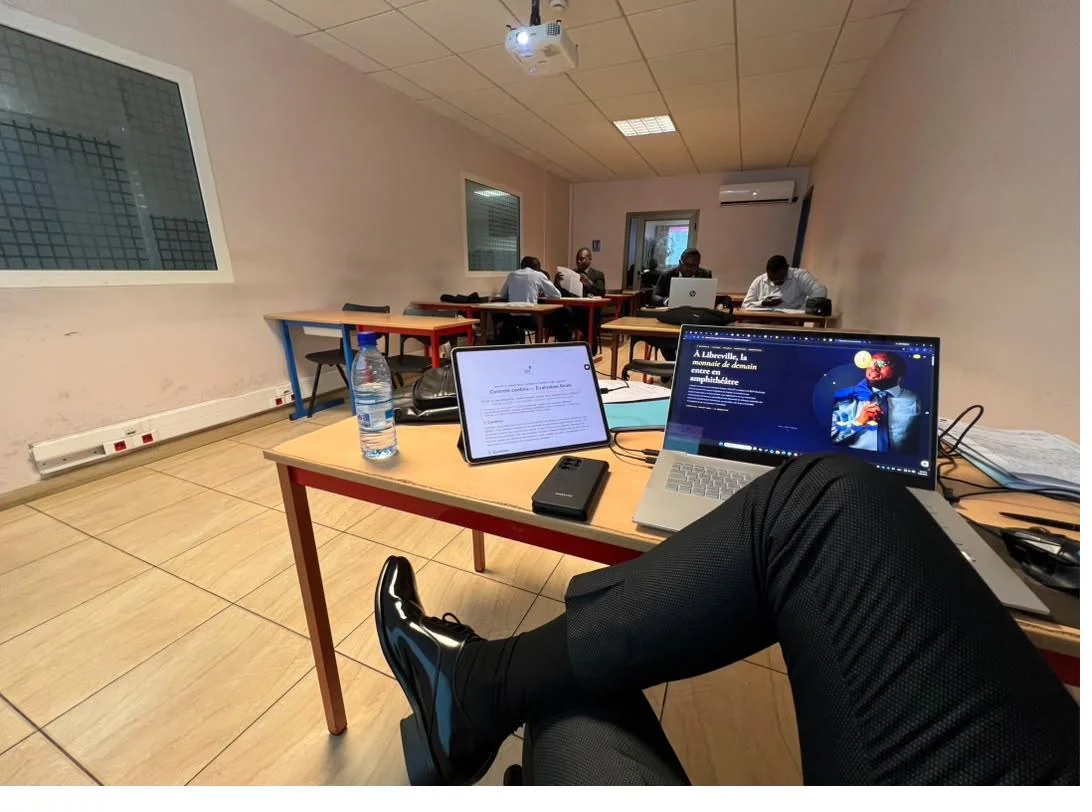
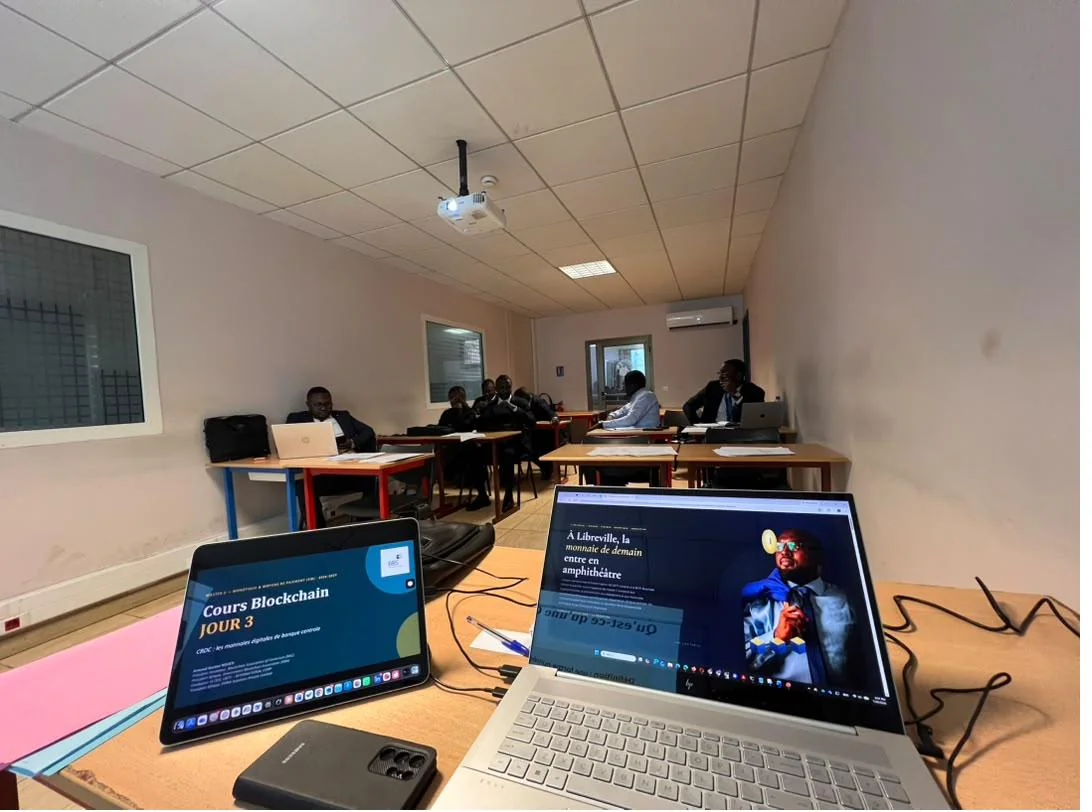
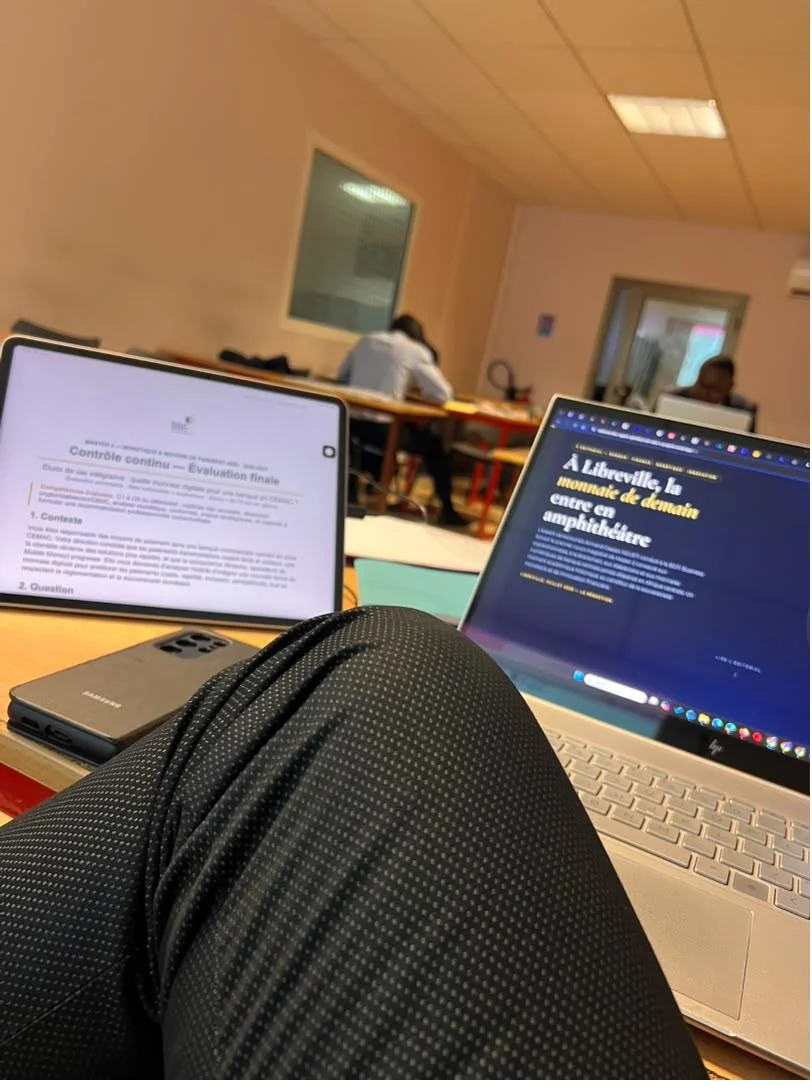
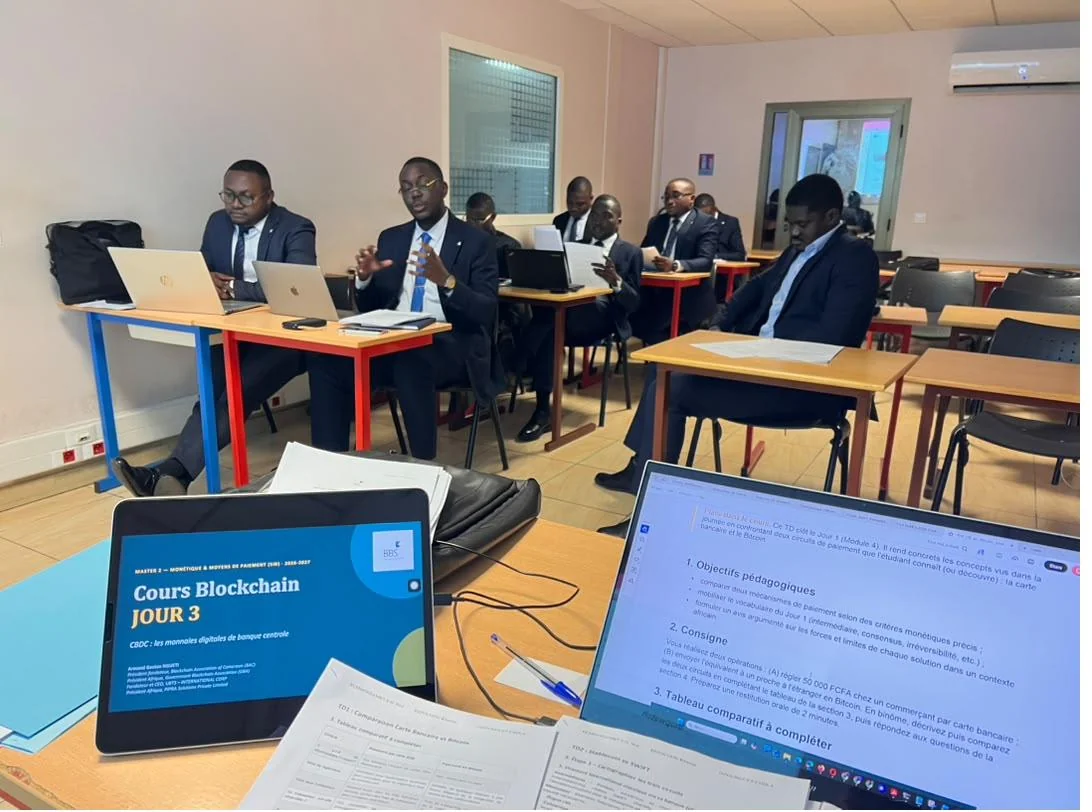
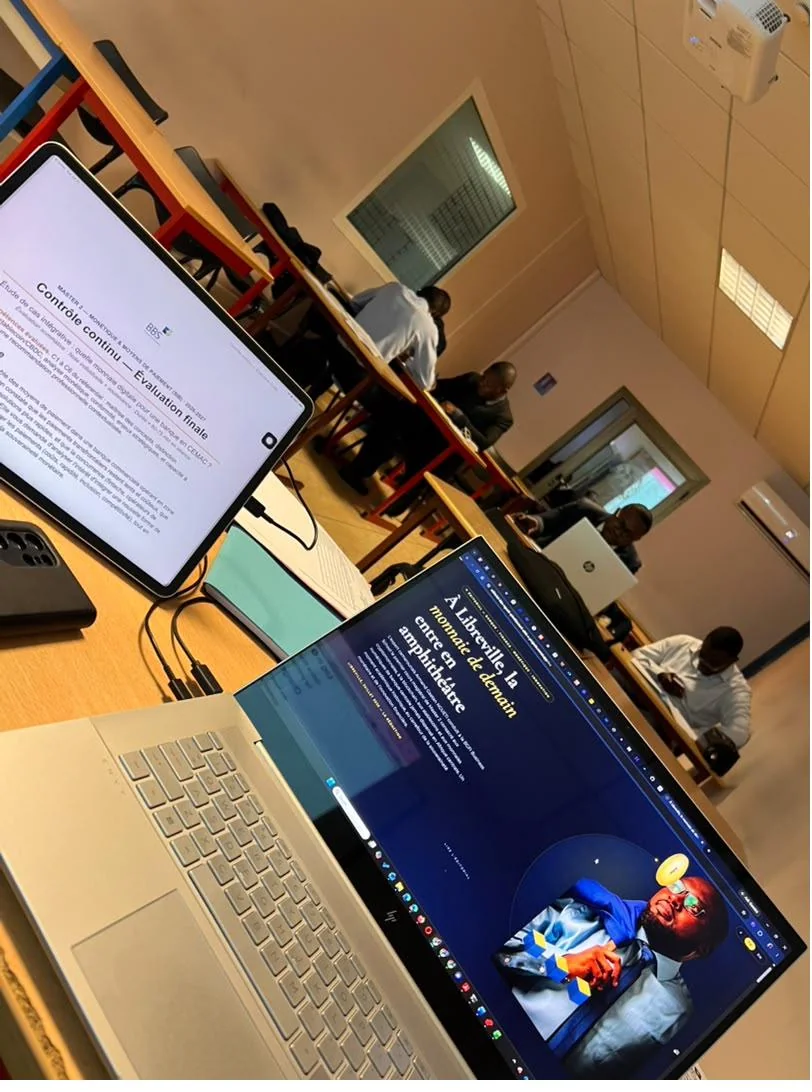
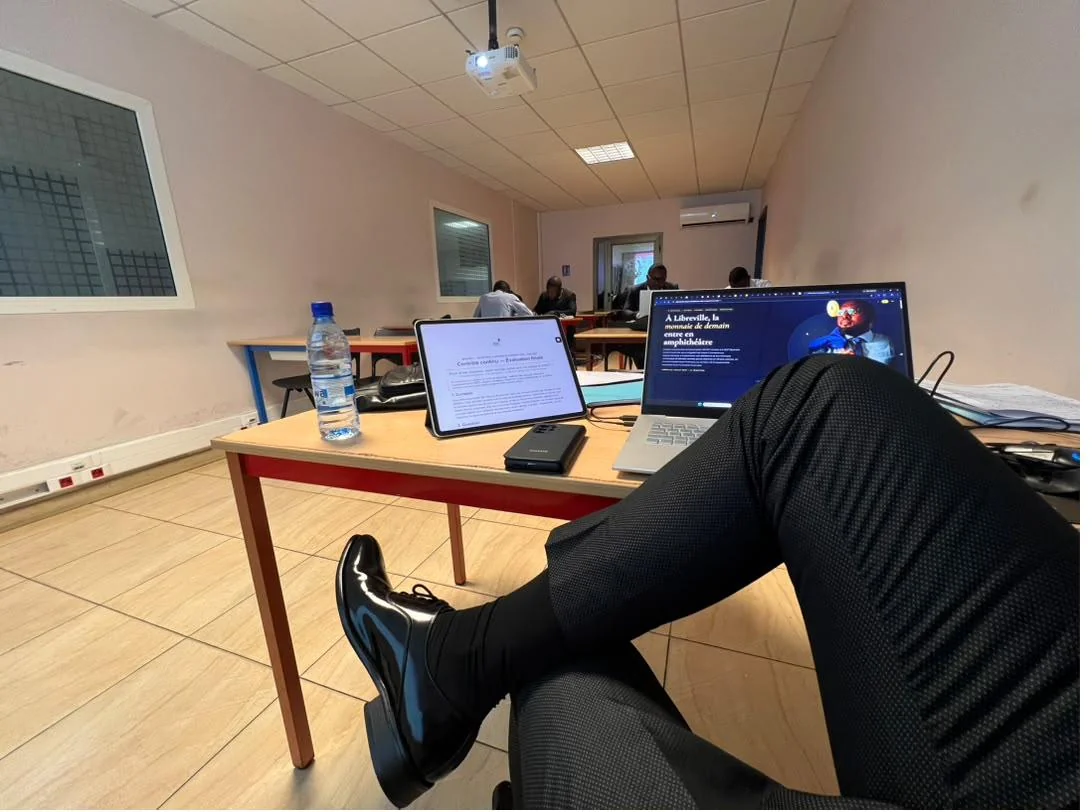
Picture the scene — the photographs tell it better than any press release. On the instructor's desk, a tablet displays the day's cover: "Blockchain Course — DAY 3. CBDCs: central bank digital currencies". Beside it, a laptop shows the tutorial instructions; annotated sheets circulate — comparison tables to complete, bank card versus Bitcoin, stablecoin versus SWIFT versus PAPSS. Facing the instructor, men in dark suits — serving bank executives — laptops open, documents in hand, debate.
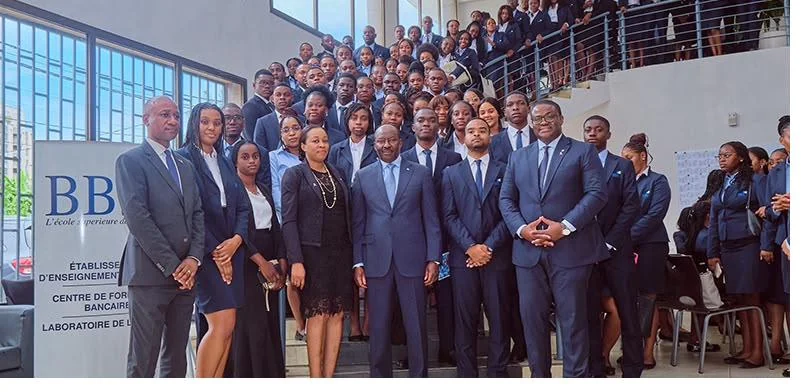
That is the singularity of this cohort: it is not composed of students seeking a first job, but of bankers already holding responsibilities across the sub-region's banking architecture. When the third day's workshop asks "what would a CBDC be for, in Africa and in Europe?", the answers do not come from textbooks: they come from the trading rooms, the compliance departments, the payments divisions where these participants work every morning.
The most telling exercise remains the second day's tutorial: pay 50,000 CFA francs to a merchant by bank card, then send the equivalent to a relative abroad in Bitcoin — describe both circuits, compare them, prepare a two-minute oral debrief. In a few hours, notions reputed esoteric — intermediaries, consensus, irreversibility — become criteria of professional arbitration. That is exactly the promise of the course description: to develop "the critical thinking needed to distinguish the real value of these technologies from the hype". This is far, very far, from crypto evangelism. This is the training of decision-makers.


Africa must not be a spectator of its monetary destiny. It must become its operator — and that begins in a classroom.
The syllabus — designed end to end by the expert, with its dedicated materials — is a lesson in instructional design. Four days climb the levels of Bloom's taxonomy, from "knowing" to "evaluating and creating", without a single line of code: the approach is resolutely business- and payments-driven, every concept tied to its concrete effects on payments — costs, speed, settlement, compliance, competition.
An estimated fifty-five hours of student work — classes, readings, project — for roughly two ECTS credits; a bibliography running from Nakamoto (2008) to the BIS Papers on CBDCs in Africa, from the IMF working paper on the eNaira to the 2025 Chainalysis reports, through to the MiCA texts, the GENIUS Act and the 2022 CEMAC financial market regulation. Six competencies structure the learning outcomes — and this is where the course ceases to be a local event and becomes a continental affair.


These six competencies are not résumé lines: they are keys for reading Africa's monetary moment. For everywhere on the continent, the projects they illuminate are already under way.
This is where the skills apply from the very next week. BEAC's accession to PAPSS, formalized on 9 July 2026, must be made operational by the end of 2026: every CEMAC bank will have to connect its systems, train its teams, rethink its payment corridors — precisely what the course's second tutorial simulates. Add the BEAC's communications on the digital CFA franc project, the 2022 CEMAC financial market regulation, COBAC and COSUMAF supervision, and field initiatives such as CAMTRADE PASS in Cameroon, already applying blockchain, AI and IoT to "Made in Cameroon" traceability. Competency C6 — recommending, as a professional, stablecoin, CBDC or status quo for a bank in the zone — is here, quite literally, the question of the moment.
Nigeria gave the continent its first full-scale experience with the eNaira, launched in 2021 — and the course studies it without complacency, through the critical reading delivered by the IMF: limited initial adoption, rich in lessons on design, incentives and trust. On the WAEMU side, the BCEAO advances with caution while PAPSS, born in the West African Monetary Zone, extends its network. Between the vitality of Mobile Money, the youth of the fintechs of Lagos, Dakar and Abidjan and the rigour of the central banks, West Africa illustrates competency C2: distinguishing speculative crypto from utility stablecoins and sovereign digital money.
Morocco offers the regulatory case study: after years of a general prohibition on crypto-asset transactions, the kingdom made public draft law 42-25, MiCA-inspired, which would place the sector under the dual supervision of Bank Al-Maghrib and the AMMC — stablecoin issuance being reserved to licensed institutions — while the central bank pursues its studies on an e-dirham. This is competency C4 in action: reading a regulatory framework, understanding the allocation of oversight, anticipating AML/CFT obligations. For the lawyers and compliance officers trained in Libreville, the North African movement is an immediate benchmark.
Since 2018, the South African Reserve Bank has methodically rolled out the Project Khokha programme: tokenized interbank settlement first, then, with Khokha 2, the trial of a wholesale CBDC and debenture tokens alongside the country's major banks and the JSE; participation in Project Dunbar with the BIS and the central banks of Australia, Malaysia and Singapore; and now work combining a wholesale CBDC with bank-issued stablecoins for regional payments. Southern Africa teaches competency C5: monetary sovereignty is not proclaimed, it is experimented — proof of concept after proof of concept.
Above the regions, a common design: the African Continental Free Trade Area and its market of more than a billion consumers, whose Achilles heel remains the cost and slowness of cross-border payments. With 28 countries connected to PAPSS, external frameworks stabilizing — MiCA in Europe, the GENIUS Act in the United States — and African central banks moving from studies to pilots, the decade now opening will demand an entire generation of executives able to analyse, compare and decide. The Libreville cohort is a prototype. It must not remain an exception.

"From Douala to Washington, from Bangalore to Johannesburg: a journey wholly bent toward a single ambition — that Africa become the operator, and no longer the spectator, of its digital destiny."
Armand Gaetan NGUETI, 37, describes himself as an architect of digital transformation initiatives, a management researcher and a tactical adviser on global-local TradeTech policy. His impact on international economic strategy was confirmed in 2025 by his appointment as a T20 Delegate at the G20 Summit in South Africa. At that level, and as executive coordinator for Central Africa of the African Digital Economy Summit (AfriDES), he supported the South African G20 presidency and steers strategic coordination across the eleven countries of ECCAS.
Founder and global CEO of Universal Broadband & Technology Services International Corp (USA), he leads a think-tank reinventing the business models of digital platforms in electronic communications and smart agriculture — from intelligent Wi-Fi ecosystems deployed with MTN Cameroon to the UBTS Africa Agritech Digital Passport (UAA-DP), which grants agricultural products a blockchain-based digital identity, from farm to consumer. A strategist of the Sovereign AI Alliance through PIPRA Solutions, whose Africa region he chairs, he champions "endogenous AI": data sovereignty, vernacular AI, strategic resilience. He is also the inventor of CAMTRADE PASS — blockchain, AI and IoT in the service of the "Made in Cameroon" label.
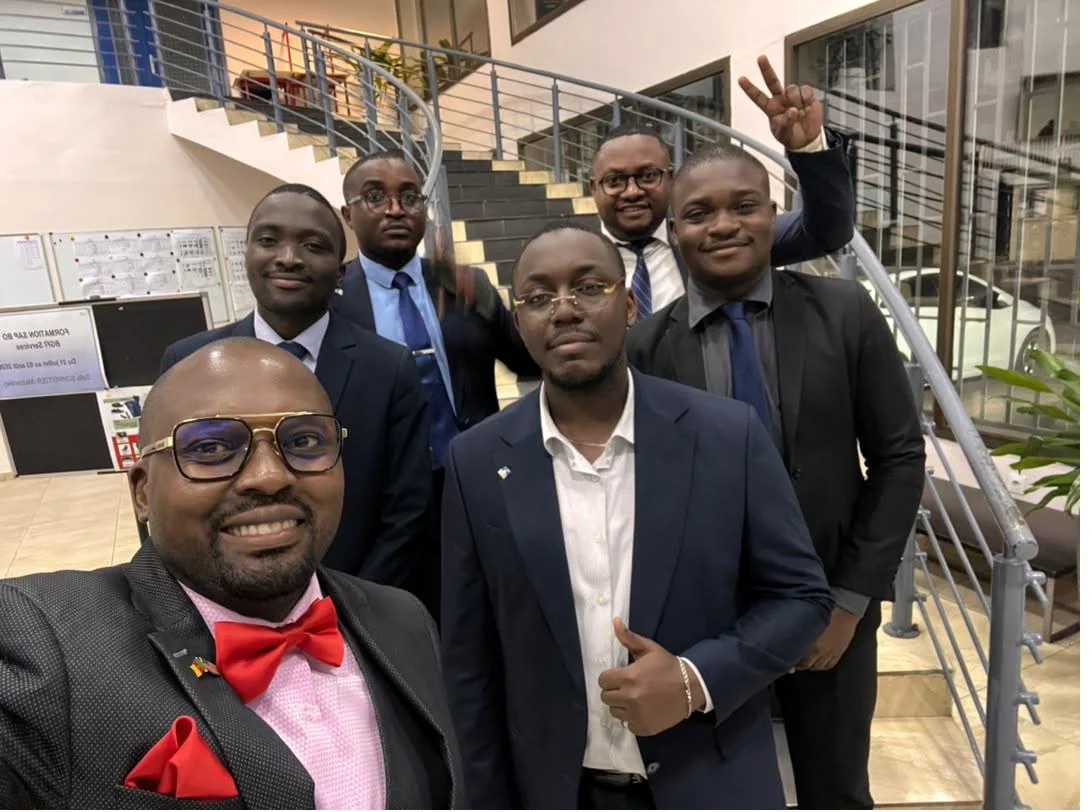
An executive researcher in management science at Université Paul-Valéry Montpellier 3, he bridges academic rigour and industrial innovation. A Microsoft Certified Trainer at just 24, trained in Bangalore, he holds a distinction with no equivalent: the first and, to date, only consultant in the world certified in the Blockchain Maturity Model (BMM) originating from Africa. Based between Atlanta, Washington, Lagos, Bangalore and Hyderabad, he relentlessly builds the alliances that make this Libreville course far more than a one-off intervention: a milestone.
At the close of the week, international expert Armand Gaetan NGUETI — T20 Delegate at the G20 Summit in South Africa, Africa President of the Government Blockchain Association, the continent's first and only BMM-certified consultant — did not conclude with self-congratulation. He concluded with a call. His strategic communication team relays it here, faithfully, to all of Africa's stakeholders:

The window is open: PAPSS is here, CBDC studies are maturing, MiCA and the GENIUS Act set external benchmarks. Equip your teams with the competence to arbitrate — not merely to be cautious. The continent's monetary sovereignty will be decided within the next five years.
Connecting CEMAC to PAPSS by the end of 2026 is not an IT project: it is a change of model. Train your payments, risk and compliance departments now — the Libreville cohort shows that fifteen well-designed hours are enough to transform an executive's outlook.
You have proven that Africa can invent its own financial usages. The next chapter — regulated stablecoins, interoperability with CBDCs, pan-African corridors — will be written with those who speak both the language of innovation and that of compliance.
The BGFI Business School has just proven it can be done: a rigorous syllabus, LMD-aligned, anchored in African cases, without a line of code. Replicate it, adapt it, surpass it — from Dakar to Nairobi, from Casablanca to Cape Town. Every cohort trained is a brick of sovereignty.
Legal frameworks can no longer wait for usages to become entrenched. The Moroccan example shows that an orderly exit from the grey zone is possible; the South African example, that methodical public experimentation is fruitful. Legislate in full knowledge — and train those who will write the texts.
The careers in payments, compliance and digital strategy opening up on this continent do not require you to be developers. They require you to understand. This course was designed for complete beginners in digital assets: the door is more open than you think. Walk through it.